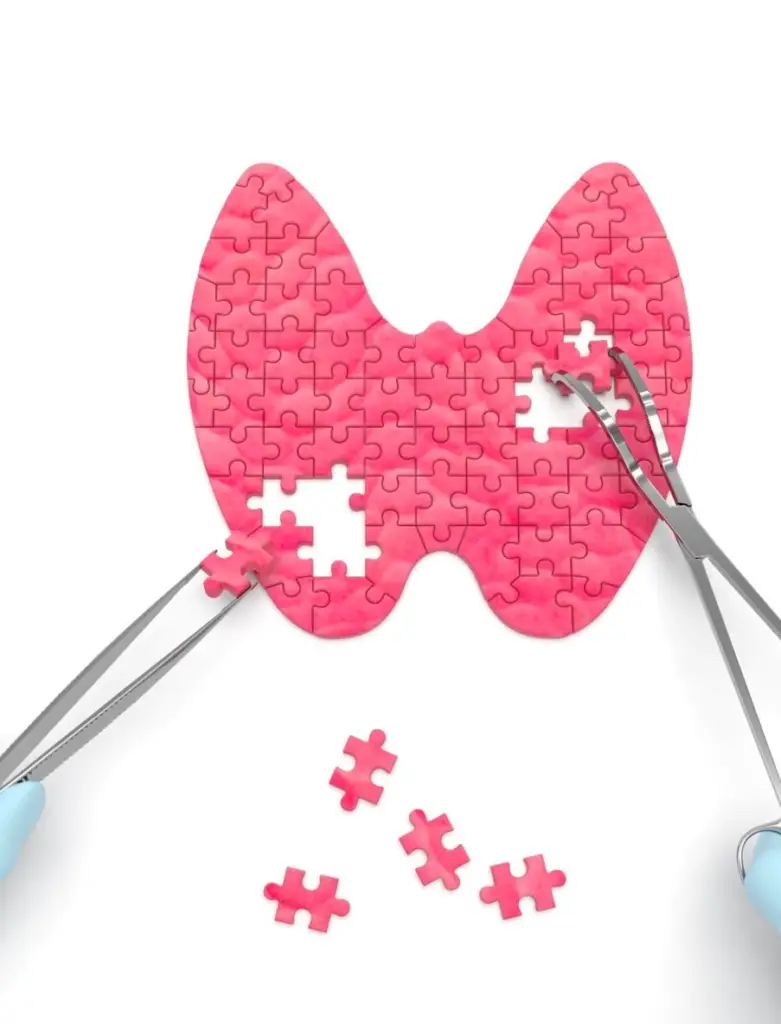
The thyroid gland is a small, butterfly-shaped gland located at the front of the neck. Despite its size, it plays an important role in how you feel on a daily basis.
It helps regulate metabolism, energy production, temperature control, menstrual health, mood, cholesterol balance and cognitive function.
The thyroid primarily produces thyroxine, known as T4. It also produces a smaller amount of triiodothyronine, T3. T4 acts largely as a storage hormone. Most active T3 is produced outside the thyroid through conversion of T4 in tissues such as the liver and gut.
This conversion process depends on adequate nutrients, healthy liver function, gut integrity and overall metabolic resilience. The body can also convert T4 into reverse T3, an inactive form. This pathway may become more prominent during periods of illness, physiological stress or significant metabolic strain. In selected cases, this can contribute to symptoms despite standard thyroid markers appearing within range.
Thyroid physiology is interconnected and dynamic, not simply a single number on a laboratory report.